Serverless onboarding: from existing institutional systems to a controlled execution boundary.
Serverless Edition is designed to augment existing institutional systems rather than replace them wholesale. Onboarding therefore begins not with a new frontend but with the protected effect: which action must be governed, and at which technical point must a BLOCK actually prevent the effect?

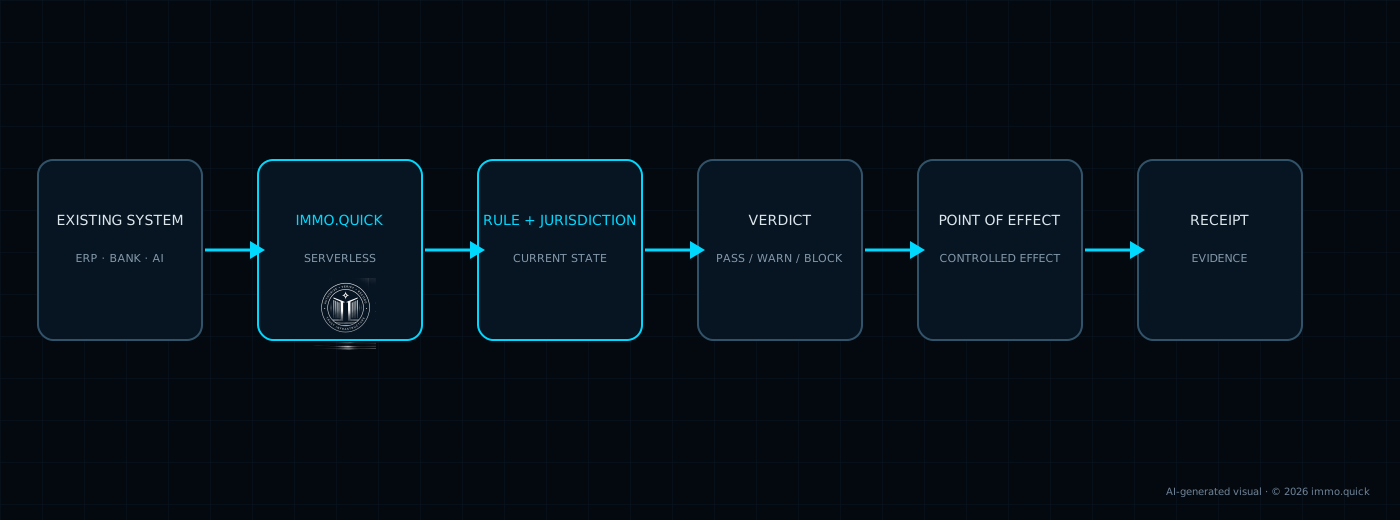
The integration target is not a dashboard. It is the execution boundary.
Each stage creates concrete technical and institutional acceptance criteria, exposing bypass paths or unresolved authority dependencies before production.
Define protected actions
Payments, approvals, AI actions, registry changes, data transfers and other consequence-bearing actions are inventoried.
Model authority sources
Mandates, delegations, competencies and external authority sources are mapped. A technical role is not automatically treated as authority.
Connect data and evidence
Internal systems, registries, APIs, documents and external sources are connected with explicit provenance and staleness rules.
Activate jurisdictions and rule domains
Relevant legal spaces and sector control families are mapped to protected actions.
Connect the point of effect
The Serverless Edition is coupled to the real commit or execution point so that a BLOCK can actually prevent effect.
Run adversarial acceptance
Revocation, stale state, source outage, replay, parallel requests, collisions and privileged manipulation are tested.
Operationalize evidence
Receipts, retention, key management, rule changes and independent verification become part of ongoing operations.
Existing systems remain in place. The control boundary is added where it is required.
Institutions can combine integration patterns. What matters is that the chosen pattern actually controls protected effect and provides the data required for a valid decision state.
API / Request-Response
Existing applications query Serverless Edition immediately before protected action.
Workflow / Platform Hook
A process binds execution to a defined approval or commit point.
Event Pipeline
Relevant state changes can trigger re-evaluation of existing execution conditions.
AI / Agent Interlock
Agents may propose action; institutional authority is resolved outside the model.
Data & File Intake
JSON, XML, CSV, XLSX, PDF and structured exports can feed controlled evaluation paths.