Evaluate logistics approvals in their full operational context.
Transport, handover and release depend on more than a route. Parties, goods, origin, destination, permits and time conditions may all be relevant. The logistics domain binds the applicable evaluation to the specific operation and preserves the states and evidence used.
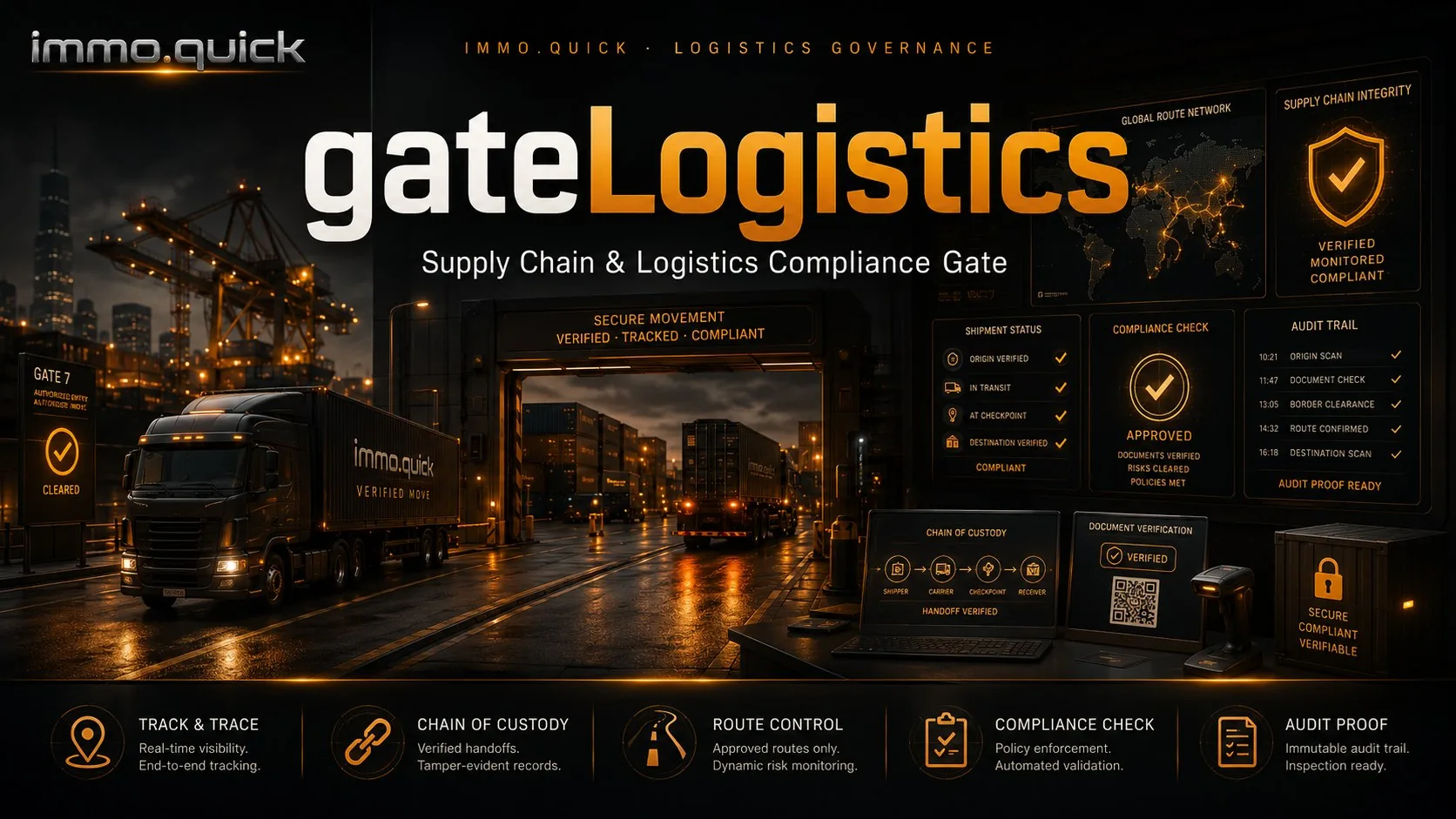
Logistik & Rail: sector controls in institutional context
This sector page now anchors its relevant control families in the actual institutional workflow rather than treating gates as a detached catalog. The purpose is to show what each control contributes, which data and dependencies it requires, and how a material block affects the final execution state.

SECTOR PROCESS · ARCHITECTURE OVERVIEW
From a domain finding to a permitted action
Route or vehicle clearance alone does not authorize a time- and role-dependent transport operation.
01 · INPUT & CONTEXT
What action is proposed, by which actor, on which object and at what time?
02 · DOMAIN CHECK
Applicable rules and data sources determine the domain state; a gate finding remains an input.
03 · AUTHORITY & RIGHTS
Legal basis, competent authority, scope, time and dependencies must be valid for the specific action.
04 · EXECUTION & EVIDENCE
Only a valid execution right permits a protected action; evidence records determination and execution status separately.
ILLUSTRATIVE MODEL · Not a live receipt or universal legal clearance. A positive gate check alone does not grant an execution right.
SECTOR GATE FAMILIES
Applicable control domains
The gate names below map publicly documented controls to this sector. Actual availability for a tenant is determined separately by institutional onboarding and valid Execution Rights™.
- gateIntralogistics
- gateLogistics
- gateRailLogistics
This mapping is neither a legal clearance nor a guarantee that every control is active for every tenant.
One sector. Three distinct determination domains.
gateLogistics
Transport, supply-chain, dangerous-goods and cross-border logistics conditions for a defined movement or hand-off.
gateIntralogistics
Internal material movement, machinery state, OT dependencies and safety-related conditions in warehouse and production environments.
gateRailLogistics
Rail-specific vehicle, route, dangerous-goods and operational conditions for a defined rail movement.
Determine. Close rights. Only then execute.
Five dimensions must close for the defined action.
Logistics is composed from multiple states, not a super-gate.
What the logistics domains can — and cannot — do.
CAN
- deterministically evaluate encoded logistics conditions
- surface missing or conflicting dependencies
- bind determination evidence to the defined state
CANNOT
- create governmental or contractual authority
- issue transport, operating or safety approvals
- independently create an Execution Right or Capability
Execution rights™ in Logistics
Logistics and execution rights™: connect goods release, recipients, transport conditions and current permissions with traceable evidence.
A shipment is prepared. If the recipient changes, the basis for its protected release must match the changed transaction.
The difference: a dashboard displays information and a log records events. The additional control question is whether the specific action may take effect under current conditions at the integrated execution path. A positive checking result alone is insufficient. Effectiveness must be accepted for the actual target systems and execution paths.
Serverless Edition™ · Jurisdictions · All sectors · The architecture difference